JointBrex Official Website › Choosing A Joint Supplement
Choosing A Joint SupplementChoosing A Joint Supplement: Eight Checks, In Order
Find the serving size, then the lead ingredient’s amount, then whether any extract is characterised, then the allergen line. Those four take ninety seconds and settle most of the aisle. The other four — other ingredients, proprietary blends, the refund window and the price a day — settle the rest.
Written to be used on any bottle, with this one as the worked example because its panel prints enough to work with.
The first four joint-label checks, in ninety seconds
Find the serving size, before anything else
Every amount on a panel is per serving, and a serving is rarely one capsule. A bottle of 60 capsules at two a serving is thirty days, not sixty, and a label showing 1,000 mg per two capsules is not the same product as one showing 1,000 mg per capsule.
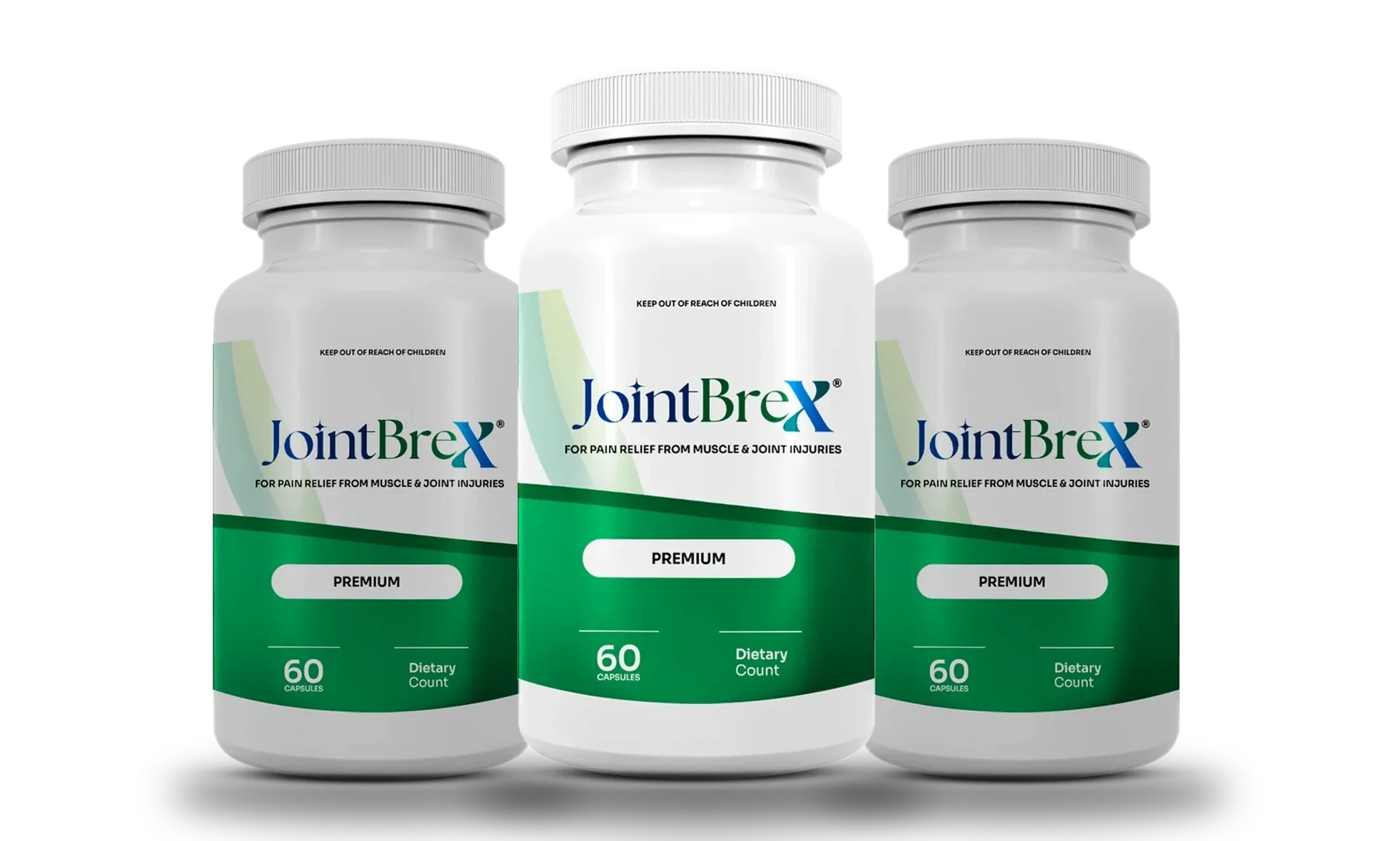
JointBrex: two vegetable capsules, thirty servings, 30 days.
Find the lead ingredient and its amount
One ingredient usually carries most of the weight, and the panel is ordered by amount, so it is the first line. Compare that number with the amount the ingredient's own trials used. If it is within about two thirds, the comparison is worth having; below a fifth, the ingredient is present rather than dosed.
JointBrex: glucosamine sulfate 1,000 mg against a studied 1,500 mg. Two thirds.
Check whether any extract is characterised
“Boswellia extract 133.3 mg” and “133.3 mg of extract standardised to 30% AKBA” are different statements, and only the second can be compared with a trial. The same goes for curcuminoid content in turmeric and for activity units in an enzyme.
JointBrex: the boswellia amount is in the trial range and the standardisation is not stated, so the match cannot be confirmed.
Read the allergen line
It sits below the other ingredients, set small, and it is the line most likely to rule somebody out entirely. In this category it is not hypothetical: glucosamine is commonly made from crustacean shell.
JointBrex: Contains: Crustacean shellfish (crayfish). That is an exclusion for anyone with a shellfish allergy.
The second four joint-label checks
Read the other-ingredients line
It tells you what the capsule is made of and what was used to fill it. A short line is a good sign; a long one is not automatically a bad one, but it is worth knowing what is there.
JointBrex: Cellulose (Vegetable Capsule), Rice Flour — a two-item line, which is shorter than most in this aisle.
Look for a proprietary blend
A blend prints one total for several ingredients, which makes every individual amount unknowable. A panel that names an amount for each ingredient is doing something a blend cannot, even when some of those amounts are small.
JointBrex: no blend. Eight ingredients, eight amounts.
Read the refund window and where it starts
Days, and the start date. A window counted from purchase is shorter than one counted from delivery, and it is the one to plan against. Then compare it with the pack: a 180-day supply decided inside a 60-day window is a different proposition from a 30-day one.
JointBrex: 60 days from purchase, with 30 days of use asked for first.
Work out the price a day, not the price a bottle
Divide the pack total by the days it covers. It is the only figure that compares two bottles with different counts and different serving sizes, and it is almost never printed.
JointBrex: $2.97, $1.97 or $1.63 a day depending on the pack.
The three joint-supplement claims that mean least
“Clinically studied ingredients”
Almost always true and almost always useless. It says the ingredient has been studied somewhere, at some amount, in somebody. It does not say this product was studied, or that the amount here matches the one that was. Ask which trial and at what amount.
“Doctor formulated”
Meaningful only when a clinician is named, with a qualification you can look up. A seal with no name behind it is a typeface. This is the weakest emblem in the category and it is on a great many bottles.
“FDA-registered facility”
Every facility making supplements for the US market registers. It is a notification, not an approval, and no dietary supplement is FDA-approved. The label's own asterisk says as much, two inches away.
None of the three is dishonest. All three are true statements that answer a question nobody asked, and the reason to recognise them quickly is that the ninety seconds they consume are better spent on the serving size.
A joint-supplement comparison, run properly
| The check | Bottle A, a typical blend | JointBrex | Which is better |
|---|---|---|---|
| Serving size | Stated | Stated: two capsules | Equal |
| Lead ingredient amount | Inside a proprietary blend | 1,000 mg, printed | JointBrex |
| Every ingredient amount | Not available | All eight printed | JointBrex |
| Extract characterisation | Not stated | Not stated | Equal |
| Allergen line | Usually present | Present and specific | Equal |
| Refund window | Varies | 60 days from purchase | Depends |
| Price a day | Calculable | $1.63–$2.97 | Depends |
Bottle A is a composite of the proprietary-blend labels common in this aisle, not a specific product.
The point of running the comparison this way is that it separates two questions that usually get merged: whether a label tells you what is in it, and whether what is in it is enough. A panel can be excellent on the first and weak on the second, and this one is.
The full reading of this particular panel is on the JointBrex panel page, and the ingredient-by-ingredient comparison is on the ingredients page.
What this joint-supplement guide read
Eight, for the amounts and the guideline positions quoted.
- Clegg DO, Reda DJ, Harris CL, et al. Glucosamine, chondroitin sulfate, and the two in combination for painful knee osteoarthritis. N Engl J Med. 2006;354(8):795-808. PMID 16495392. https://pubmed.ncbi.nlm.nih.gov/16495392/
- Towheed TE, Maxwell L, Anastassiades TP, et al. Glucosamine therapy for treating osteoarthritis. Cochrane Database Syst Rev. 2005;(2):CD002946. PMID 15846645. https://pubmed.ncbi.nlm.nih.gov/15846645/
- Singh JA, Noorbaloochi S, MacDonald R, et al. Chondroitin for osteoarthritis. Cochrane Database Syst Rev. 2015;1:CD005614. PMID 25629804. https://pubmed.ncbi.nlm.nih.gov/25629804/
- Dalmonte T, Andreani G, Rudelli C, Isani G. Efficacy of Extracts of Oleogum Resin of Boswellia in the Treatment of Knee Osteoarthritis: A Systematic Review and Meta-Analysis. Phytother Res. 2024;38(12):5672-5689. PMID 39314013. https://pubmed.ncbi.nlm.nih.gov/39314013/
- Daily JW, Yang M, Park S. Efficacy of Turmeric Extracts and Curcumin for Alleviating the Symptoms of Joint Arthritis: A Systematic Review and Meta-Analysis of Randomized Clinical Trials. J Med Food. 2016;19(8):717-29. PMID 27533649. https://pubmed.ncbi.nlm.nih.gov/27533649/
- Butawan M, Benjamin RL, Bloomer RJ. Methylsulfonylmethane: Applications and Safety of a Novel Dietary Supplement. Nutrients. 2017;9(3):290. PMID 28300758. https://pubmed.ncbi.nlm.nih.gov/28300758/
- Kolasinski SL, Neogi T, Hochberg MC, et al. 2019 American College of Rheumatology/Arthritis Foundation Guideline for the Management of Osteoarthritis of the Hand, Hip, and Knee. Arthritis Rheumatol. 2020;72(2):220-233. PMID 31908163. https://pubmed.ncbi.nlm.nih.gov/31908163/
- National Center for Complementary and Integrative Health. Glucosamine and Chondroitin for Osteoarthritis: What You Need To Know. U.S. National Institutes of Health. https://www.nccih.nih.gov/health/glucosamine-and-chondroitin-for-osteoarthritis