JointBrex Official Website › Testing & Quality
Testing & QualityJointBrex Testing And Quality: Nine Seals, Read One At A Time
The artwork carries nine emblems. Four of them describe the facility, three describe the ingredients, one describes the capsule shell and one describes the refund. None of them is a measurement of what is in your bottle, and one of them names nobody at all.
A seal is a claim like any other. The useful question is what evidence would have to exist behind it.
The nine JointBrex joint seals
 Manufactured in the USAA statement about where the capsules were filled. It says nothing about where the eight raw materials were grown or extracted.
 GMPGood Manufacturing Practice describes how a facility documents and controls a run. It is a process standard, not a test of this bottle.
 FDA-registered facilityEvery facility making a supplement for the US market registers with the FDA. Registration is not approval, and no supplement is FDA-approved.
 Non-GMOA sourcing claim about the raw materials. The artwork names no certifying body behind it.
 Natural ingredientsA marketing word with no regulatory definition in the United States. Read the panel rather than the roundel.
 Doctor formulatedNo clinician is named on the artwork or on the seller's page, so there is nobody to look up. Treat it as a style, not a credential.
 Naturally gluten freeConsistent with the panel: the two other ingredients are cellulose and rice flour. The word 'naturally' means no gluten testing is claimed.
 VegetarianThe capsule shell is cellulose, and the shell is all this emblem can speak for. The glucosamine inside is declared as crustacean shellfish, so the capsule as a whole is neither vegetarian nor vegan.
 60-day money backA promise about money, counted from the date of purchase. It is the only seal here that a buyer can actually enforce, by telephone.
The three JointBrex joint seals that describe the factory
Manufactured in the USA, GMP and FDA-registered facility all describe where and how the capsules were made. They are the most commonly misread emblems in the category, and they are worth separating carefully.
| Emblem | The underlying fact | The common misreading |
|---|---|---|
| FDA-registered facility | Every facility manufacturing dietary supplements for the US market is required to register with the FDA. Registration is a notification. | That the FDA has approved the product. It has not. No dietary supplement is FDA-approved, and the label's own asterisk says so. |
| GMP | Good Manufacturing Practice is a documented system of process control: written procedures, records, cleaning, identity checks on incoming material. | That the contents were assayed. GMP is about the process that made the batch, not about the batch's composition. |
| Manufactured in the USA | Where the powder was blended and the capsules filled. | That the raw materials are American. Boswellia resin and turmeric root are imported crops, and the artwork makes no claim otherwise. |
Taken together the three say: a registered US facility with a documented process made this. That is a genuine and useful thing to know. It is not a statement about potency, and no combination of the three ever becomes one.
The JointBrex joint seals that describe the ingredients
Non-GMO
A sourcing claim about the raw materials. The artwork names no certifying body, so there is no registry to look it up in. The four botanicals on the panel are not crops usually grown in modified form, and the glucosamine is declared as shellfish-derived; the open question is anything made by fermentation, and the panel does not say how any ingredient was made.
Natural ingredients
“Natural” has no regulatory definition for supplements in the United States. It is a tone rather than a fact. The panel is the document that says what is in the capsule, and it is two sections away.
Naturally gluten free
Consistent with the panel: the other ingredients are cellulose (vegetable capsule), rice flour, neither of which contains gluten. The word “naturally” is doing specific work — it signals that no gluten testing is being claimed, only that no gluten-bearing ingredient was used.
Vegetarian
The capsule shell is cellulose, so the shell contains no gelatin, and the shell is all this emblem can speak for. The panel prints Contains: Crustacean shellfish (crayfish): glucosamine here is a shellfish-derived material, so the capsule as a whole is neither vegetarian nor vegan.
Doctor formulated
No clinician is named anywhere on the artwork or on the seller's page. There is nobody to look up, no qualification to check and no institution to write to. This is the weakest emblem in the set and the one this desk would give no weight at all.
60-day money back
The only emblem in the nine that a buyer can actually enforce, and the only one attached to a mechanism: a telephone number, an order ID and a 60-day window. The guarantee page sets out how.
What this desk would want tested on a JointBrex joint bottle
If a certificate of analysis for this lot were published tomorrow, four lines on it would matter more than the rest, and two of them are questions the panel itself leaves open.
- The glucosamine assay. It is 1,000 mg of a 1,400 mg serving and 71% of the formula. If one number on a certificate is worth reading, it is this one.
- The boswellia standardisation. The panel gives a weight and a plant part but no AKBA percentage, so the one ingredient whose amount matches its trials cannot currently be compared with them.
- The bromelain activity. Enzymes are normally declared in GDU or FIP units rather than milligrams, and 16.7 mg on its own says nothing about activity.
- Heavy metals. Turmeric in particular has a documented history of adulteration with lead-containing pigments in some supply chains, which is a sourcing question rather than a formulation one.
A lot number, JOI-26/JO-3706, and a certificate reference, JOI-3706-26-JO. Those identify a run and a filing. The batch page explains how to match them against the base of your own bottle, and what that check does and does not establish.
What this JointBrex quality page read
Five, for the regulatory background and the turmeric safety signal.
- National Center for Complementary and Integrative Health. Glucosamine and Chondroitin for Osteoarthritis: What You Need To Know. U.S. National Institutes of Health. https://www.nccih.nih.gov/health/glucosamine-and-chondroitin-for-osteoarthritis
- MedlinePlus. Osteoarthritis. U.S. National Library of Medicine, National Institutes of Health. https://medlineplus.gov/osteoarthritis.html
- National Institute of Arthritis and Musculoskeletal and Skin Diseases. Osteoarthritis. U.S. National Institutes of Health. https://www.niams.nih.gov/health-topics/osteoarthritis
- Halegoua-DeMarzio D, Navarro V, Ahmad J, et al. Liver Injury Associated with Turmeric - A Growing Problem: Ten Cases from the Drug-Induced Liver Injury Network [DILIN]. Am J Med. 2023;136(2):200-206. PMID 36252717. https://pubmed.ncbi.nlm.nih.gov/36252717/
- Butawan M, Benjamin RL, Bloomer RJ. Methylsulfonylmethane: Applications and Safety of a Novel Dietary Supplement. Nutrients. 2017;9(3):290. PMID 28300758. https://pubmed.ncbi.nlm.nih.gov/28300758/
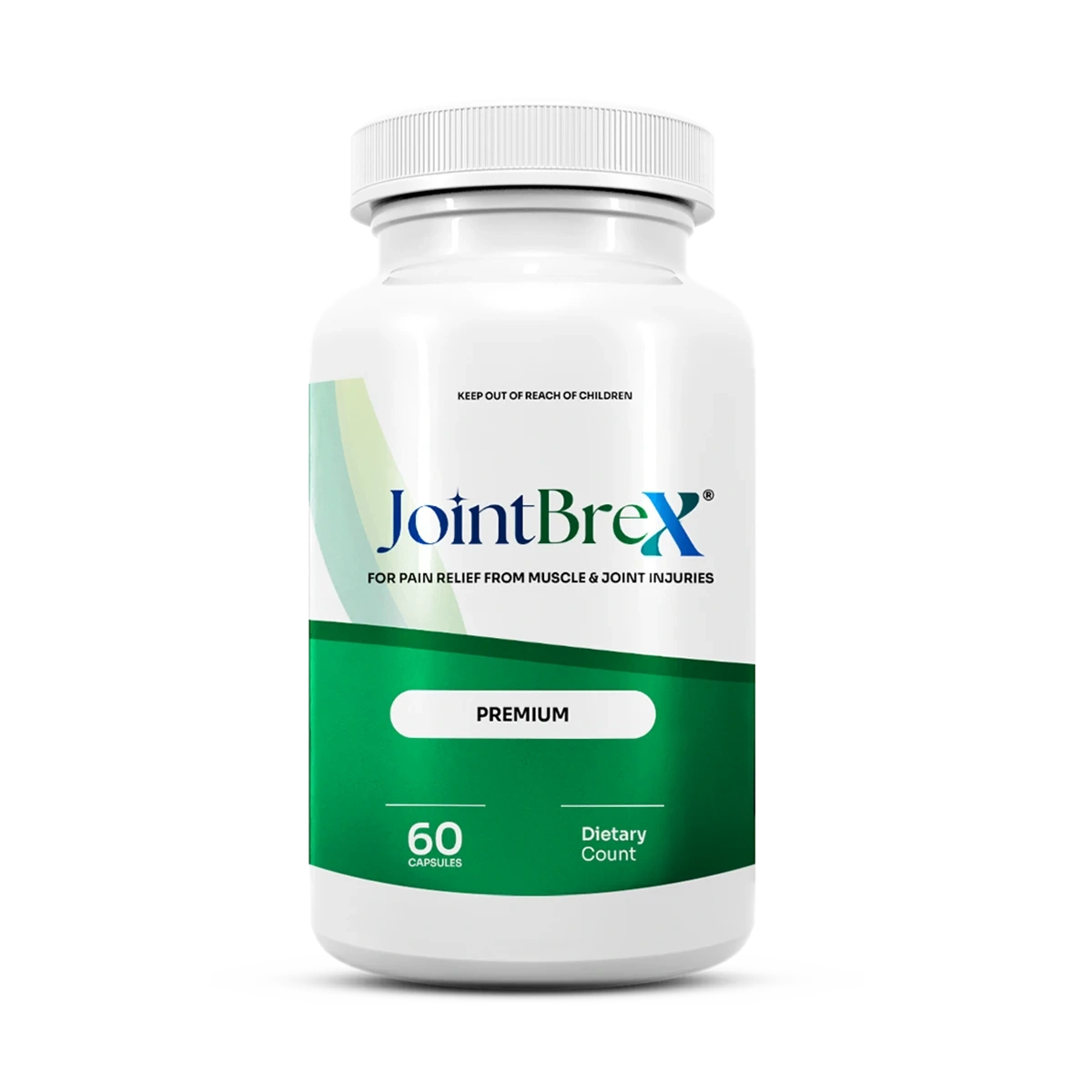
Order JointBrex knowing what the seals cover
A registered facility with a documented process, a panel that prints every amount, and a refund window with a telephone number behind it.
One bottle $89 · six bottles $294 · 60-day money-back guarantee
Order JointBrex From This CounterLot JOI-26/JO-3706 · 1,400 mg a serving across eight printed lines · dispatched inside the United States