JointBrex Official Website › Ingredients
IngredientsJointBrex Ingredients: All Eight Panel Lines, With Amounts
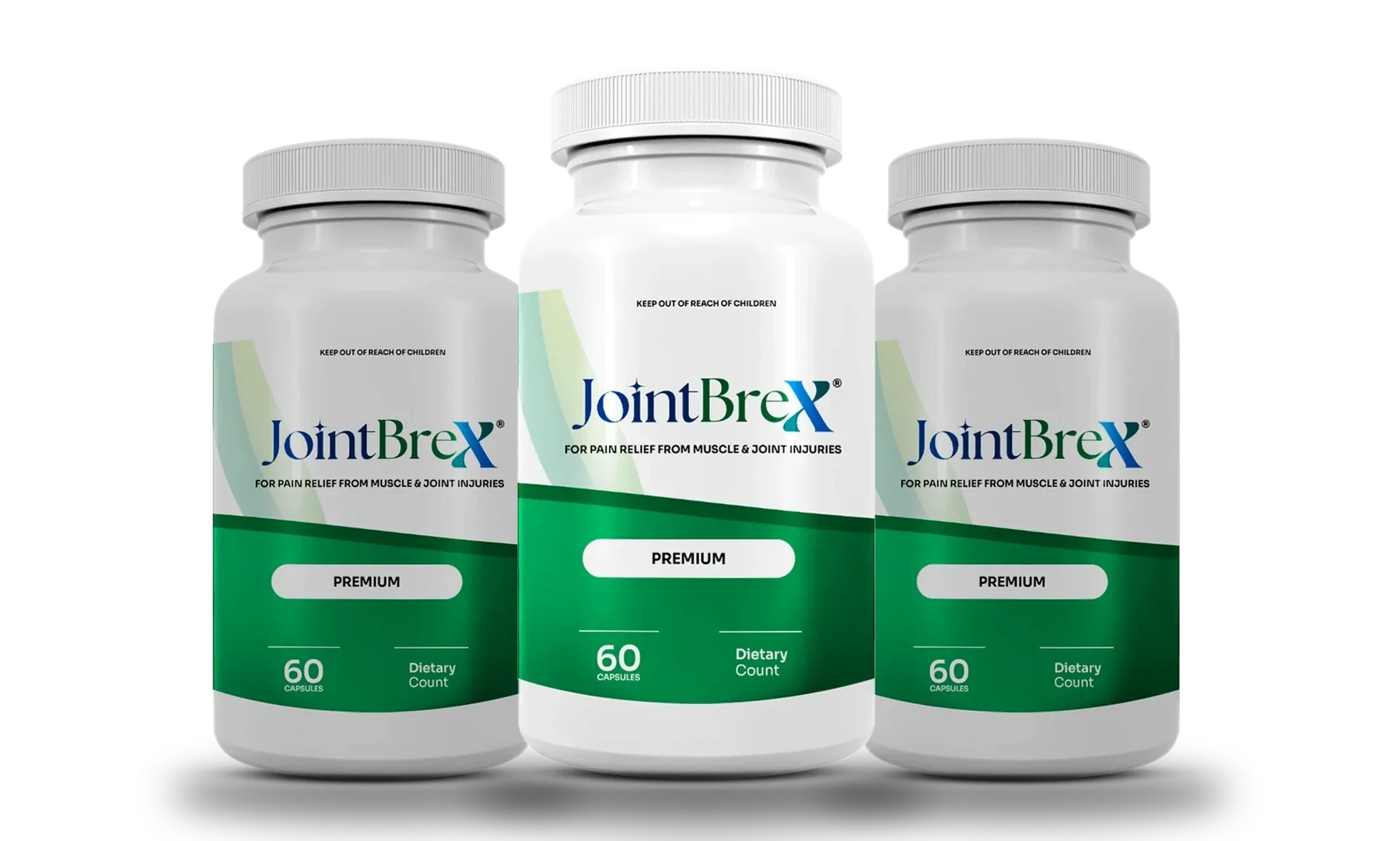
The printed panel declares eight ingredients and an amount for each: glucosamine sulfate 1,000 mg, boswellia extract 133.3 mg, chondroitin sulfate 100 mg, turmeric 100 mg, and quercetin, methionine, MSM and bromelain at 16.7 mg apiece. That is 1,400 mg a serving. The advertising for this product names six of the eight.
Below, each of the eight in the order the bottle prints them, with what it is, what the published work used, and how far apart the two numbers are.
The eight JointBrex joint ingredients, one at a time
Amount as printed on the panel, then the amount the research used.
Glucosamine Sulfate
1000 mg a servingAn amino sugar the body already makes, and the single largest thing in this capsule at 1,000 mg of a 1,400 mg serving. It is the ingredient the whole category was built on: sold since the 1980s, tested in thousands of people, and still argued about.
The trials that made its name used 1,500 mg a day. The US government's GAIT trial randomised 1,583 adults with knee osteoarthritis to glucosamine, chondroitin, both, celecoxib or placebo and found no overall benefit for the supplements; three-year European trials of glucosamine sulfate reported a structural effect on joint-space narrowing. Both are real results and they disagree, which is why the current guidelines decline to recommend it.
This label gives two thirds of that amount. It is the only line on the panel where the comparison is close enough to be worth making.
Boswellia Extract
Boswellia serrata, resin133.3 mg a servingIndian frankincense: the oleogum resin of Boswellia serrata, used in Ayurvedic practice and studied in the modern literature for its boswellic acids, which inhibit the 5-lipoxygenase enzyme in inflammatory signalling.
Of everything on this panel it has the most favourable recent evidence: a 2024 systematic review and meta-analysis of boswellia oleogum resin extracts in knee osteoarthritis, and a 2026 network meta-analysis comparing it with turmeric and with the two combined. The trials behind those used 100 to 250 mg a day of extract standardised to a stated AKBA content.
133.3 mg sits inside that range, which makes this the one line where the amount is not the problem. The problem is that the panel does not say what the extract is standardised to, so there is no way to tell whether 133.3 mg here is the same thing as 100 mg there.
Chondroitin Sulfate
100 mg a servingA long sugar chain that holds water inside cartilage, and glucosamine's near-permanent shelf partner. A pharmacokinetic study in healthy men has followed non-animal chondroitin and its constituents into the bloodstream after an oral dose, which settles the question of whether any of it is absorbed.
The amount is where it stops settling. The Cochrane review pooled trials mostly using 800 to 1,200 mg a day and described the body of evidence as low quality; the MOVES trial paired 1,200 mg of chondroitin with 1,500 mg of glucosamine and reported non-inferiority to celecoxib at six months in people with severe knee pain.
100 mg is between a twelfth and an eighth of those amounts. Whatever the chondroitin literature shows, this label is not delivering the amount that produced it.
Turmeric
Curcuma longa, root100 mg a servingThe rhizome of Curcuma longa, and the source of the curcuminoids that carry almost all of the research interest. A meta-analysis of randomised trials in arthritis found symptom improvement at around 1,000 mg a day of curcumin — not of turmeric root, which is only about 3% curcuminoids by weight.
Absorption is the second issue and it is well quantified: the classic human study of piperine used 2 g of curcumin with and without 20 mg of piperine and measured the difference. This panel names no absorption enhancer.
100 mg of turmeric root is therefore an order of magnitude below the studied amount even before absorption is considered. It is also worth knowing the other direction: the Drug-Induced Liver Injury Network has published ten cases of liver injury linked to turmeric supplements, at amounts far above this one.
Quercetin
Sophora japonica, bud16.7 mg a servingA flavonoid, here sourced from the flower bud of the Japanese pagoda tree, Sophora japonica, which is the commercial source for most quercetin on the market. It has broad antioxidant activity in the laboratory and a thin clinical record.
The one arthritis trial worth citing gave 500 mg a day for eight weeks to women with rheumatoid arthritis and reported improvements in early-morning stiffness and pain. Rheumatoid arthritis is an autoimmune disease and not the wear-related stiffness this bottle is aimed at, so even that trial is an approximate guide.
16.7 mg is about 3% of the amount that trial used, in a different condition.
Methionine
16.7 mg a servingAn essential sulfur-bearing amino acid. The body cannot make it, so it comes from food — eggs, fish, meat, sesame, brazil nuts. A normal day of eating supplies something on the order of a gram, which is roughly sixty times what this capsule adds.
This is the panel line most often misread, and the misreading is worth naming. The molecule with an osteoarthritis literature behind it is S-adenosylmethionine, a different compound made from methionine inside the body and studied at 600 to 1,200 mg a day. Methionine is its precursor. They are not interchangeable and nothing on this panel is S-adenosylmethionine.
No trial of plain methionine for a joint outcome exists at any amount.
MSM
Methylsulfonylmethane16.7 mg a servingMethylsulfonylmethane, an organic sulfur compound. It is on the bottle and it is not in the advertising for this product, which is the more interesting half of the sentence, because it has a better clinical record than two ingredients the advertising does name.
The pilot trial in knee osteoarthritis gave 3,000 mg twice a day for twelve weeks and reported improvements in pain and physical function. A safety and applications review puts the studied range at 1.5 to 6 grams a day and finds it well tolerated across that range.
16.7 mg is about three tenths of one per cent of the pilot trial's daily amount. Its presence on the panel is honest; its amount is a gesture.
Bromelain
Ananas comosus, stem16.7 mg a servingA mixture of proteolytic enzymes from the stem of the pineapple, Ananas comosus. Like MSM it is declared on the bottle and left out of the advertising, and like MSM it has randomised human trials behind it in the exact condition this product is sold for.
A placebo-controlled pilot study and a 16-week trial scored on the WOMAC index both used 800 mg a day. A 2025 crossover trial of an oral enzyme combination containing bromelain reported reductions in systemic inflammation markers, urinary CTX-II and pain in knee osteoarthritis.
16.7 mg is about 2% of 800 mg. Enzyme activity is also usually declared in activity units rather than milligrams, and this panel gives neither.
The two JointBrex joint ingredients the advertising leaves out
MSM and bromelain are on the container and absent from the marketing, and both have trials the marketing's own choices do not.
The seller’s ingredient section names six ingredients, and the INSIDE JOINTBREX tile graphic on this website carries the same six. The container declares eight.
The usual version of this story runs the other way: a marketing page promises more than the panel delivers. Here the panel is the generous document, and what is missing from the marketing is the part a buyer would want to know about.
| On the printed panel | In the advertising | Randomised human trials in knee osteoarthritis | |
|---|---|---|---|
| Glucosamine sulfate | Yes, 1000 mg | Yes | Many, including GAIT |
| Boswellia extract | Yes, 133.3 mg | Yes | Several, pooled in a 2024 meta-analysis |
| Chondroitin sulfate | Yes, 100 mg | Yes | Many, pooled by Cochrane |
| Turmeric | Yes, 100 mg | Yes | Several, pooled in 2016 |
| Quercetin | Yes, 16.7 mg | Yes | None. One trial, in rheumatoid arthritis |
| Methionine | Yes, 16.7 mg | Yes | None at any amount. The studied molecule is a different one |
| MSM | Yes, 16.7 mg | No | Yes, a pilot trial at 6 g a day |
| Bromelain | Yes, 16.7 mg | No | Yes, two trials at 800 mg a day |
Trial column counts randomised controlled trials of the single ingredient in knee osteoarthritis, not laboratory or animal work.
Read the last column on its own and the marketing has dropped two of the four ingredients on this panel with a direct trial record, and kept two with none. Nothing about that changes what arrives in the bottle, which is the point: buy on the panel.
What the two other JointBrex ingredients are for
Two of them, and then the allergen line that sits underneath.
Under the eight actives the panel prints a second, shorter list: Cellulose (Vegetable Capsule), Rice Flour. Those are the capsule and the filler.
Cellulose is the vegetable capsule shell, so the shell itself contains no gelatin. Rice flour is the bulking agent that lets a machine fill a capsule reproducibly — 1,400 mg of actives will not by itself occupy two capsules evenly.
There is no magnesium stearate, no silicon dioxide, no titanium dioxide and no colourant on this list, which is a shorter other-ingredients line than most bottles in this category carry.
Contains: Crustacean shellfish (crayfish). Glucosamine is commonly produced from shellfish shell, and at 1,000 mg it is the largest single thing in this capsule. It also means the capsule is neither vegetarian nor vegan, although its shell is plant cellulose. Anyone with a shellfish allergy should not take this product.
How to read any joint panel, using JointBrex as the worked example
Five steps that work on any bottle in this aisle.
Find the serving size first
Everything on a panel is per serving, and a serving is not a capsule. Here it is two vegetable capsules, so the 1,000 mg of glucosamine is the amount in both of them together, not in each.
Add the amounts up
The eight lines here total 1,400 mg. That number tells you how much room is left once the lead ingredient has taken its share, and here 1,000 of the 1,400 mg is spoken for before the other seven start.
Divide each line by its own trial amount
Not by the other lines. An ingredient is either at a studied amount or it is not, and 16.7 mg of MSM is not made larger by sitting beside 1,000 mg of something else.
Check whether an extract is characterised
“Boswellia extract 133.3 mg” is not the same statement as “133.3 mg of extract standardised to 30% AKBA”. Where the standardisation is missing, the amount cannot be compared with the trials even when the milligrams match.
Read the allergen and other-ingredients lines last, and never skip them
They are set smaller and they are where the exclusions live. On this panel the allergen line rules out a whole group of buyers, and it is two lines below the last active.
The panel itself, photographed and transcribed, is on the JointBrex Supplement Facts page, and how each amount compares with its trials is set out on the how it works page.
The sources behind these JointBrex ingredient notes
Seventeen papers, one or more for every ingredient on the panel that has any.
- Clegg DO, Reda DJ, Harris CL, et al. Glucosamine, chondroitin sulfate, and the two in combination for painful knee osteoarthritis. N Engl J Med. 2006;354(8):795-808. PMID 16495392. https://pubmed.ncbi.nlm.nih.gov/16495392/
- Reginster JY, Deroisy R, Rovati LC, et al. Long-term effects of glucosamine sulphate on osteoarthritis progression: a randomised, placebo-controlled clinical trial. Lancet. 2001;357(9252):251-6. PMID 11214126. https://pubmed.ncbi.nlm.nih.gov/11214126/
- Towheed TE, Maxwell L, Anastassiades TP, et al. Glucosamine therapy for treating osteoarthritis. Cochrane Database Syst Rev. 2005;(2):CD002946. PMID 15846645. https://pubmed.ncbi.nlm.nih.gov/15846645/
- Singh JA, Noorbaloochi S, MacDonald R, et al. Chondroitin for osteoarthritis. Cochrane Database Syst Rev. 2015;1:CD005614. PMID 25629804. https://pubmed.ncbi.nlm.nih.gov/25629804/
- Volpi N, Mantovani V, Galeotti F, Bianchi D. Oral Bioavailability and Pharmacokinetics of Nonanimal Chondroitin Sulfate and Its Constituents in Healthy Male Volunteers. Clin Pharmacol Drug Dev. 2019;8(3):336-345. PMID 30040242. https://pubmed.ncbi.nlm.nih.gov/30040242/
- Hochberg MC, Martel-Pelletier J, Monfort J, et al. Combined chondroitin sulfate and glucosamine for painful knee osteoarthritis: a multicentre, randomised, double-blind, non-inferiority trial versus celecoxib. Ann Rheum Dis. 2016;75(1):37-44. PMID 25589511. https://pubmed.ncbi.nlm.nih.gov/25589511/
- Dalmonte T, Andreani G, Rudelli C, Isani G. Efficacy of Extracts of Oleogum Resin of Boswellia in the Treatment of Knee Osteoarthritis: A Systematic Review and Meta-Analysis. Phytother Res. 2024;38(12):5672-5689. PMID 39314013. https://pubmed.ncbi.nlm.nih.gov/39314013/
- Inprasit C, Bunyamahote S, Boonpattharatthiti K, et al. Evaluating the efficacy and safety of Curcuma longa, Boswellia serrata, and their mixed formulation in treating knee osteoarthritis: A systematic review and network meta-analysis. Complement Ther Med. 2026;96:103256. PMID 41082950. https://pubmed.ncbi.nlm.nih.gov/41082950/
- Daily JW, Yang M, Park S. Efficacy of Turmeric Extracts and Curcumin for Alleviating the Symptoms of Joint Arthritis: A Systematic Review and Meta-Analysis of Randomized Clinical Trials. J Med Food. 2016;19(8):717-29. PMID 27533649. https://pubmed.ncbi.nlm.nih.gov/27533649/
- Shoba G, Joy D, Joseph T, et al. Influence of piperine on the pharmacokinetics of curcumin in animals and human volunteers. Planta Med. 1998;64(4):353-6. PMID 9619120. https://pubmed.ncbi.nlm.nih.gov/9619120/
- Halegoua-DeMarzio D, Navarro V, Ahmad J, et al. Liver Injury Associated with Turmeric - A Growing Problem: Ten Cases from the Drug-Induced Liver Injury Network [DILIN]. Am J Med. 2023;136(2):200-206. PMID 36252717. https://pubmed.ncbi.nlm.nih.gov/36252717/
- Kim LS, Axelrod LJ, Howard P, et al. Efficacy of methylsulfonylmethane (MSM) in osteoarthritis pain of the knee: a pilot clinical trial. Osteoarthritis Cartilage. 2006;14(3):286-94. PMID 16309928. https://pubmed.ncbi.nlm.nih.gov/16309928/
- Butawan M, Benjamin RL, Bloomer RJ. Methylsulfonylmethane: Applications and Safety of a Novel Dietary Supplement. Nutrients. 2017;9(3):290. PMID 28300758. https://pubmed.ncbi.nlm.nih.gov/28300758/
- Brien S, Lewith G, Walker AF, et al. Bromelain as an adjunctive treatment for moderate-to-severe osteoarthritis of the knee: a randomized placebo-controlled pilot study. QJM. 2006;99(12):841-50. PMID 17121765. https://pubmed.ncbi.nlm.nih.gov/17121765/
- Kasemsuk T, Saengpetch N, Sibmooh N, Unchern S. Improved WOMAC score following 16-week treatment with bromelain for knee osteoarthritis. Clin Rheumatol. 2016;35(10):2531-40. PMID 27470088. https://pubmed.ncbi.nlm.nih.gov/27470088/
- Henrotin Y, Pap T, Lieten S, et al. Oral enzyme combination therapy reduces systemic inflammation, urinary CTXII and pain in knee osteoarthritis: a proof-of-mechanism, randomised, crossover, double-blind, placebo-controlled trial. RMD Open. 2025;11(3):e005433. PMID 40803821. https://pubmed.ncbi.nlm.nih.gov/40803821/
- Javadi F, Ahmadzadeh A, Eghtesadi S, et al. The Effect of Quercetin on Inflammatory Factors and Clinical Symptoms in Women with Rheumatoid Arthritis: A Double-Blind, Randomized Controlled Trial. J Am Coll Nutr. 2017;36(1):9-15. PMID 27710596. https://pubmed.ncbi.nlm.nih.gov/27710596/
Order JointBrex with the panel in front of you
Eight ingredients, eight amounts, and the two the advertising leaves out printed alongside the six it names.
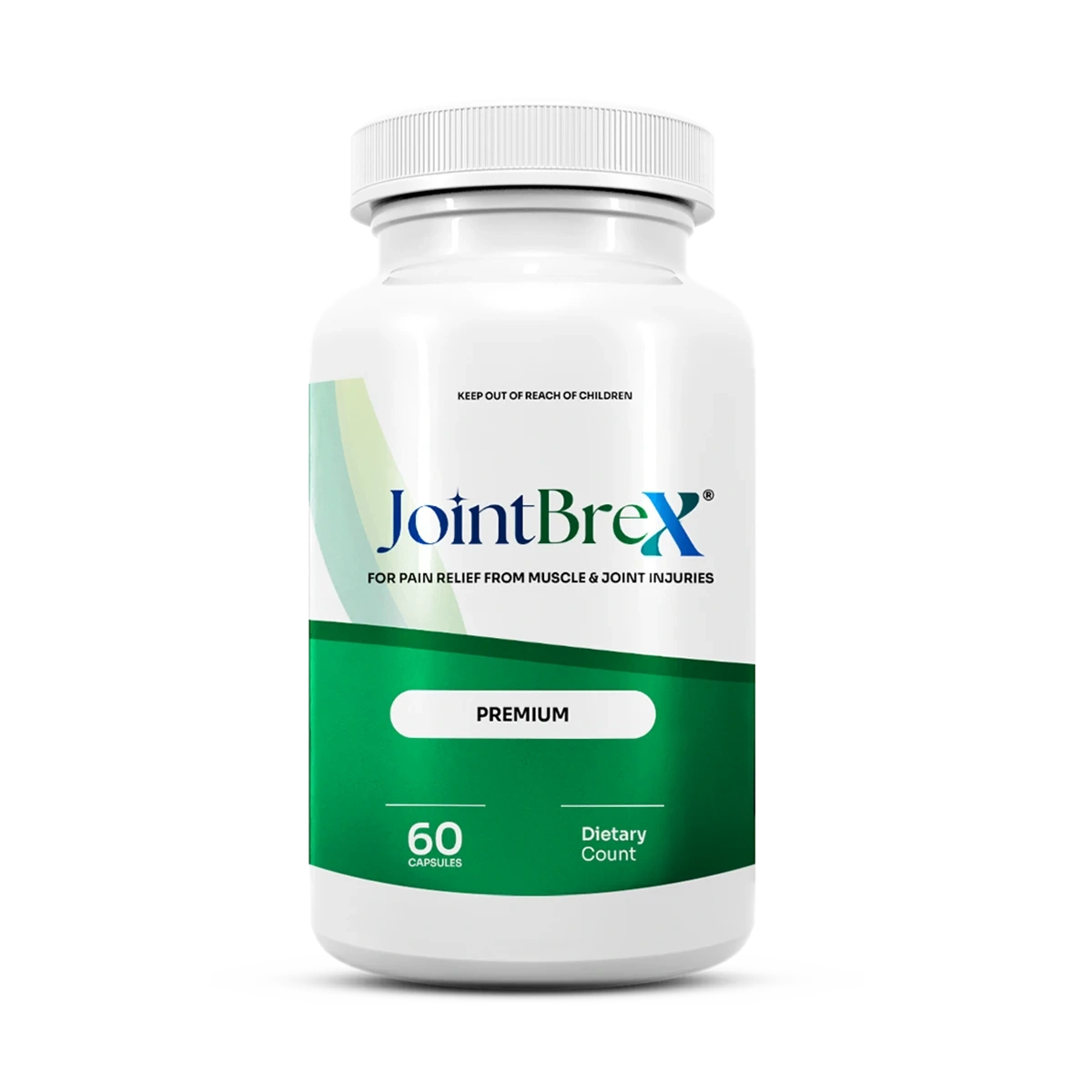
One bottle $89 · six bottles $294 · 60-day money-back guarantee
Order JointBrex From This CounterLot JOI-26/JO-3706 · 1,400 mg a serving across eight printed lines · dispatched inside the United States