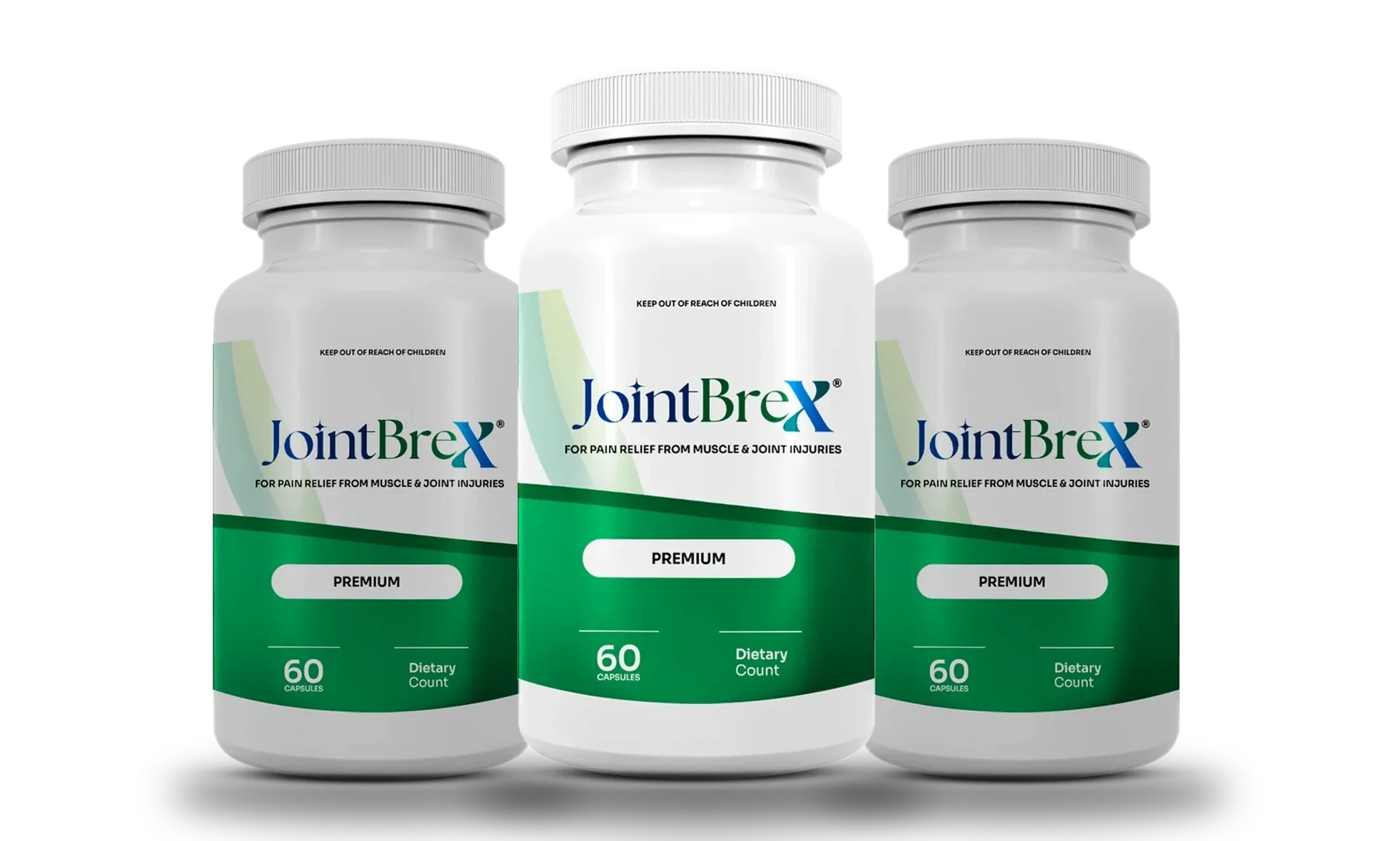
JointBrex Official Website › How It Works
How It WorksHow JointBrex Works: Three Mechanisms And The Amounts Each Needs
The eight ingredients act in three ways: two supply cartilage building blocks, three act on inflammatory signalling, and three provide sulfur or enzyme activity. The mechanisms are real and well described. Whether a given amount reaches them is a separate question, and this page keeps the two apart.
A mechanism is not a dose. Both halves of that sentence matter here, and the second half is where most joint formulas are decided.
The first JointBrex joint mechanism: supplying the matrix
Glucosamine and chondroitin are 1,100 mg of the 1,400 mg serving, so this is where the formula puts its weight.
Cartilage is a lattice of collagen fibres holding proteoglycans, which are protein cores with long sugar chains attached. The sugar chains are glycosaminoglycans, and chondroitin sulfate is one of them. Glucosamine is an amino sugar the body uses to build them.
The reasoning behind the pairing is straightforward: take in more of the raw material and the joint has more to build with. It has been argued for forty years and it is why these two are the first two names in the aisle.
It has also been tested harder than anything else here. The picture that comes back is genuinely mixed. GAIT, the largest US trial, randomised 1,583 adults and found no overall benefit against placebo, though a subgroup with moderate-to-severe pain did better on the combination. Three-year European trials of glucosamine sulfate reported slower joint-space narrowing. MOVES compared the pair against celecoxib at 1,500 mg and 1,200 mg a day and reported non-inferiority at six months. The Cochrane review of chondroitin rates the evidence low quality.
The trials used 1,500 mg of glucosamine and 800–1,200 mg of chondroitin. This panel gives 1,000 mg and 100 mg. The glucosamine line is at two thirds; the chondroitin line is at roughly a tenth. Whatever the pair can do, this is not the pairing that was tested.
The second JointBrex joint mechanism: damping the signal
Three ingredients, 250 mg between them, and one of them is the best-evidenced thing on this panel.
The boswellic acids in Boswellia serrata act on 5-lipoxygenase, which sits on the leukotriene branch of inflammatory signalling rather than the branch a non-steroidal anti-inflammatory drug works on. Curcuminoids from turmeric act on several pathways at once, which is both their appeal and the reason their trials are hard to interpret. Quercetin is a flavonoid with antioxidant activity that has not translated into much clinical evidence.
Boswellia is the strongest card on this panel. A 2024 systematic review and meta-analysis of boswellia oleogum resin extracts in knee osteoarthritis, and a 2026 network meta-analysis setting it against turmeric and against the two combined, are the most favourable recent evidence for anything in this capsule. The trials behind them used 100 to 250 mg a day of characterised extract, and 133.3 mg sits inside that.
The catch is that a boswellia trial reports the extract it used — typically standardised to a stated percentage of AKBA, the most active of the boswellic acids. This panel prints a weight and a plant part and stops. Two extracts weighing the same can differ several-fold in boswellic acid content, so the matching number does not settle the matching effect.
- The plant part, which this panel gives: resin.
- The extract ratio or the standardisation percentage, which it does not give.
- The marker compound the standardisation is measured against — AKBA for boswellia — which it also does not give.
The third JointBrex joint mechanism: sulfur and enzyme activity
MSM, methionine and bromelain share 50 mg, and two of the three are the ones the marketing forgets.
Sulfur is a structural element of connective tissue, and both MSM and methionine carry it. MSM is the one with a clinical record: a pilot trial in knee osteoarthritis gave 3 g twice daily for twelve weeks and reported improvement in pain and function, and a review puts the studied range at 1.5 to 6 grams a day. Methionine is a dietary amino acid whose joint reputation actually belongs to S-adenosylmethionine, a different molecule.
Bromelain works by a different route again. It is a proteolytic enzyme mixture, studied for swelling and soreness as much as for joints, and it has two randomised trials at 800 mg a day in knee osteoarthritis plus a 2025 crossover trial of an enzyme combination reporting falls in inflammatory markers and in urinary CTX-II, a cartilage breakdown marker.
All three are at 16.7 mg here, which is 50 mg between them out of a 1,400 mg serving. The mechanisms are documented; these amounts are not the ones that documented them.
Two of the three ingredients in this group are on the bottle and missing from the advertising — and they are the two with trials.The JointBrex Team, reading the panel against the marketing
What has to happen after you swallow the JointBrex joint capsule
Four steps, and the second one is where most of this panel stops.
It has to dissolve and be absorbed
The cellulose shell opens in the stomach. Chondroitin absorption has been measured directly in healthy volunteers, so at least part of that question is answered for one ingredient. Curcumin is the difficult one: its oral bioavailability is poor enough that the classic human study measured what adding 20 mg of piperine does to it, and this formula names no enhancer.
It has to reach a concentration that does something
This is the step the amounts decide, and it is where six of the eight lines run out. An ingredient present at 2% of its trial amount is in the bottle; it is not in the argument.
It has to keep happening
Every published trial here dosed daily for weeks or months — eight weeks for quercetin, twelve for MSM, sixteen for bromelain, six months for MOVES, three years for the glucosamine structural trials. The distributor’s own timeline of 3 to 6 weeks is consistent with that, and it is the reason a bottle is 30 days rather than a week.
And it has to beat what the joint was going to do anyway
Joint symptoms fluctuate, which is why placebo-controlled trials exist and why a good week proves nothing on its own. It is also why the guidelines rate supervised exercise and weight loss where relevant above anything in this aisle.
What this JointBrex mechanism page read
Fourteen papers, and the two guidelines that weigh them.
- Clegg DO, Reda DJ, Harris CL, et al. Glucosamine, chondroitin sulfate, and the two in combination for painful knee osteoarthritis. N Engl J Med. 2006;354(8):795-808. PMID 16495392. https://pubmed.ncbi.nlm.nih.gov/16495392/
- Reginster JY, Deroisy R, Rovati LC, et al. Long-term effects of glucosamine sulphate on osteoarthritis progression: a randomised, placebo-controlled clinical trial. Lancet. 2001;357(9252):251-6. PMID 11214126. https://pubmed.ncbi.nlm.nih.gov/11214126/
- Singh JA, Noorbaloochi S, MacDonald R, et al. Chondroitin for osteoarthritis. Cochrane Database Syst Rev. 2015;1:CD005614. PMID 25629804. https://pubmed.ncbi.nlm.nih.gov/25629804/
- Volpi N, Mantovani V, Galeotti F, Bianchi D. Oral Bioavailability and Pharmacokinetics of Nonanimal Chondroitin Sulfate and Its Constituents in Healthy Male Volunteers. Clin Pharmacol Drug Dev. 2019;8(3):336-345. PMID 30040242. https://pubmed.ncbi.nlm.nih.gov/30040242/
- Hochberg MC, Martel-Pelletier J, Monfort J, et al. Combined chondroitin sulfate and glucosamine for painful knee osteoarthritis: a multicentre, randomised, double-blind, non-inferiority trial versus celecoxib. Ann Rheum Dis. 2016;75(1):37-44. PMID 25589511. https://pubmed.ncbi.nlm.nih.gov/25589511/
- Dalmonte T, Andreani G, Rudelli C, Isani G. Efficacy of Extracts of Oleogum Resin of Boswellia in the Treatment of Knee Osteoarthritis: A Systematic Review and Meta-Analysis. Phytother Res. 2024;38(12):5672-5689. PMID 39314013. https://pubmed.ncbi.nlm.nih.gov/39314013/
- Inprasit C, Bunyamahote S, Boonpattharatthiti K, et al. Evaluating the efficacy and safety of Curcuma longa, Boswellia serrata, and their mixed formulation in treating knee osteoarthritis: A systematic review and network meta-analysis. Complement Ther Med. 2026;96:103256. PMID 41082950. https://pubmed.ncbi.nlm.nih.gov/41082950/
- Shoba G, Joy D, Joseph T, et al. Influence of piperine on the pharmacokinetics of curcumin in animals and human volunteers. Planta Med. 1998;64(4):353-6. PMID 9619120. https://pubmed.ncbi.nlm.nih.gov/9619120/
- Kim LS, Axelrod LJ, Howard P, et al. Efficacy of methylsulfonylmethane (MSM) in osteoarthritis pain of the knee: a pilot clinical trial. Osteoarthritis Cartilage. 2006;14(3):286-94. PMID 16309928. https://pubmed.ncbi.nlm.nih.gov/16309928/
- Butawan M, Benjamin RL, Bloomer RJ. Methylsulfonylmethane: Applications and Safety of a Novel Dietary Supplement. Nutrients. 2017;9(3):290. PMID 28300758. https://pubmed.ncbi.nlm.nih.gov/28300758/
- Kasemsuk T, Saengpetch N, Sibmooh N, Unchern S. Improved WOMAC score following 16-week treatment with bromelain for knee osteoarthritis. Clin Rheumatol. 2016;35(10):2531-40. PMID 27470088. https://pubmed.ncbi.nlm.nih.gov/27470088/
- Henrotin Y, Pap T, Lieten S, et al. Oral enzyme combination therapy reduces systemic inflammation, urinary CTXII and pain in knee osteoarthritis: a proof-of-mechanism, randomised, crossover, double-blind, placebo-controlled trial. RMD Open. 2025;11(3):e005433. PMID 40803821. https://pubmed.ncbi.nlm.nih.gov/40803821/
- Kolasinski SL, Neogi T, Hochberg MC, et al. 2019 American College of Rheumatology/Arthritis Foundation Guideline for the Management of Osteoarthritis of the Hand, Hip, and Knee. Arthritis Rheumatol. 2020;72(2):220-233. PMID 31908163. https://pubmed.ncbi.nlm.nih.gov/31908163/
- Bannuru RR, Osani MC, Vaysbrot EE, et al. OARSI guidelines for the non-surgical management of knee, hip, and polyarticular osteoarthritis. Osteoarthritis Cartilage. 2019;27(11):1578-1589. PMID 31278997. https://pubmed.ncbi.nlm.nih.gov/31278997/
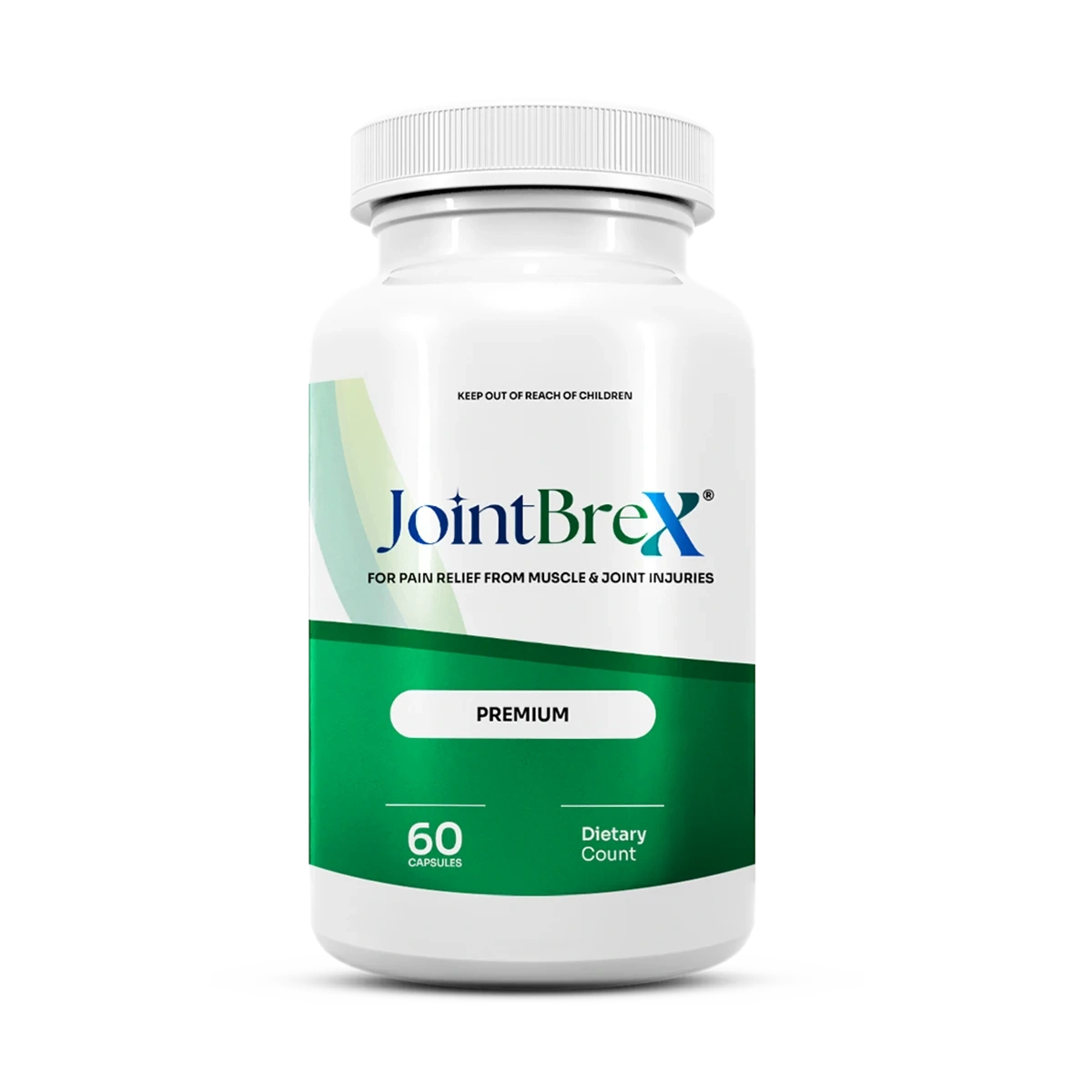
Order JointBrex knowing which line does the work
One ingredient at two thirds of its studied amount, seven supporting lines, and a panel that prints all eight so you can tell which is which.
One bottle $89 · six bottles $294 · 60-day money-back guarantee
Order JointBrex From This CounterLot JOI-26/JO-3706 · 1,400 mg a serving across eight printed lines · dispatched inside the United States