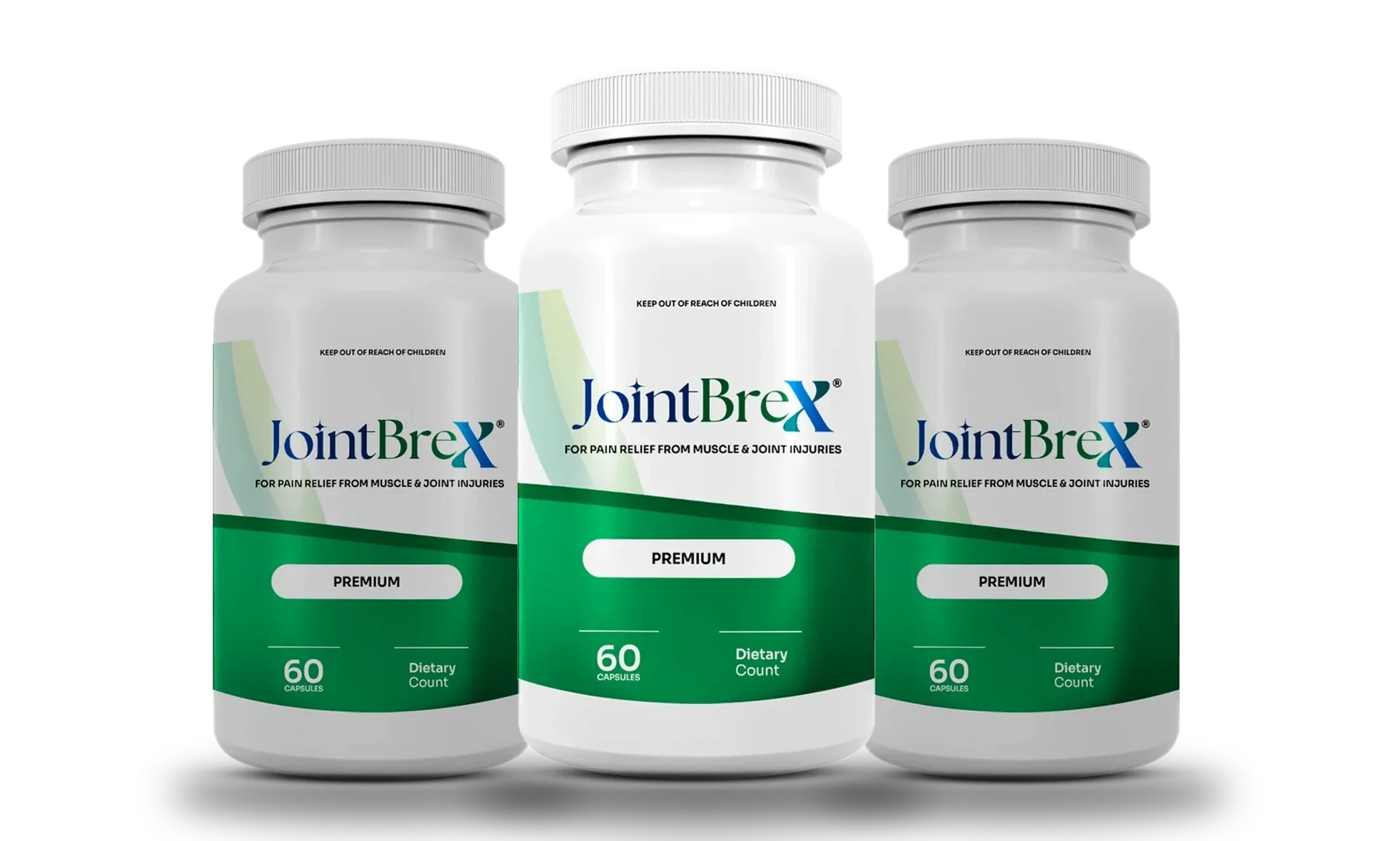
JointBrex Official Website › Articles › Ingredient deep dive
Ingredient deep diveThe MSM Line On The JointBrex Label: 16.7 mg Against A Gram-Scale Literature
The panel carries 16.7 mg of MSM. Published trials of MSM alone in knee osteoarthritis dose from 500 mg up to 6,000 mg a day — a range that starts thirty times above this label and runs past three hundred times above it. That is a large gap, and the honest statement of it is a gap, not a verdict on whether MSM itself works.
The line as printed
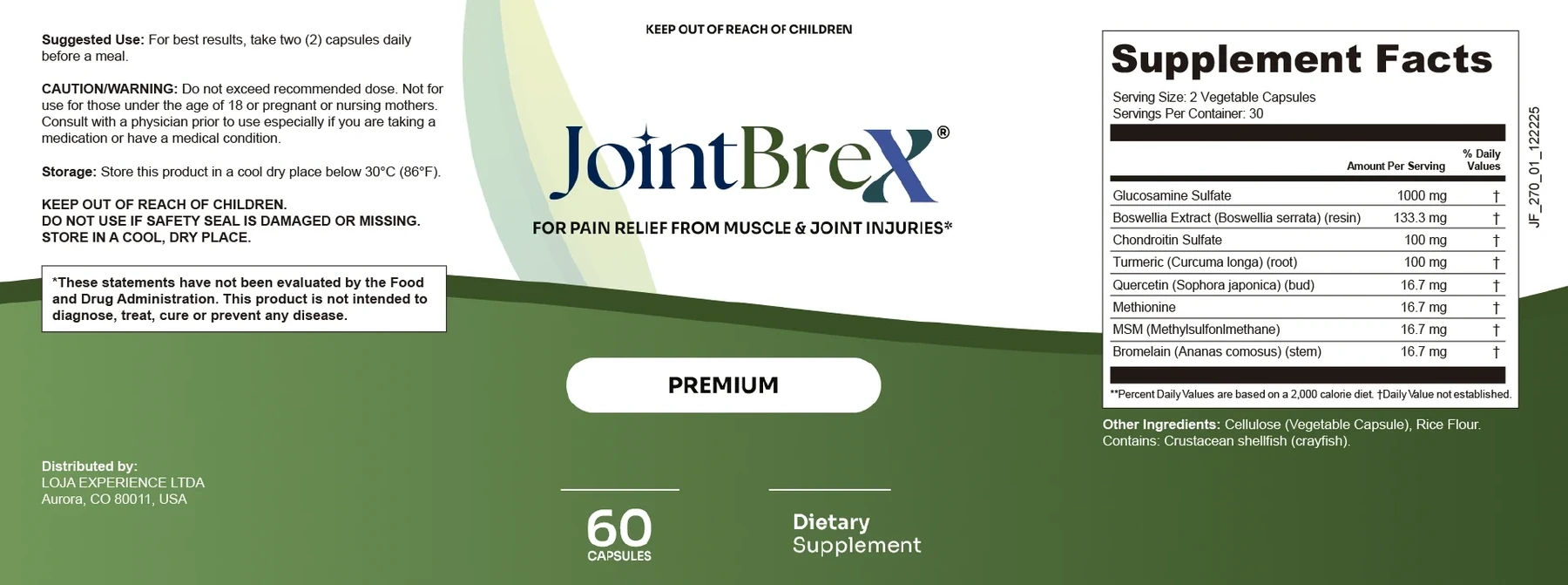
MSM — methylsulfonylmethane — is one of three ingredients tied for the smallest line on the JointBrex panel: MSM (Methylsulfonylmethane) 16.7 mg, dagger-marked for Daily Value not established, 1.2% of the 1,400 mg serving. Quercetin and bromelain share the identical figure. The full transcription is on the Supplement Facts page.
MSM is not an obscure ingredient in the joint-supplement literature. It has its own pilot trials, its own larger randomised trial, and its own dedicated safety review. All of them work in grams. This panel works in milligrams two orders of magnitude smaller. That is the gap this article measures.
This is product information, not clinical guidance, and JointBrex is a supplement rather than a therapy. A joint that is hot, swollen, locking, or getting worse week over week calls for an examination rather than a purchase; NIAMS sets out what is worth reporting.
What MSM is supposed to do
Methylsulfonylmethane is an organosulfur compound found in small amounts in a normal diet — fruits, vegetables, grains — and it is also produced synthetically for supplement use. It supplies sulfur, an element cartilage and connective tissue use in their own structural molecules, and it is investigated for anti-inflammatory and antioxidant activity, though the exact mechanism in humans is still being worked out. A 2017 review in Nutrients describes it as improving outcomes across inflammation, joint and muscle pain, and oxidative stress markers in the trials assembled to that point, while noting that the precise dose-response relationship is still under study.
The trials, gram by gram
Four sources anchor what is known about MSM dosing for joint pain, and every one of them is denominated in grams.
| Source | Design | MSM dose | Duration |
|---|---|---|---|
| Kim et al. 2006 | Pilot RCT, knee OA, MSM alone | 3,000 mg twice daily (6,000 mg/day) | 12 weeks |
| Debbi et al. 2011 | RCT, knee OA, MSM alone | 1,125 mg three times daily (3,375 mg/day) | 12 weeks |
| Lubis et al. 2017 | RCT, knee OA, MSM added to glucosamine + chondroitin | 500 mg/day, added to 1,500 mg glucosamine + 1,200 mg chondroitin | 12 weeks |
| Butawan et al. 2017 | Narrative safety review | Well tolerated up to 4,000 mg/day across the reviewed literature | — |
The 2006 pilot trial randomised patients with knee osteoarthritis to MSM or placebo, dosed at 3,000 mg twice a day, for 12 weeks, and reported reductions in pain and physical-function impairment compared with placebo, alongside a caution that the pilot's size limited how much could be concluded. The 2011 trial used a lower but still gram-scale dose, 1,125 mg three times a day, for the same duration, and reported a significant improvement in the WOMAC total score, while flagging that the size of the benefit was modest and its clinical significance unclear. The 2017 Indonesian trial is the one data point that moves toward the smaller end: 500 mg of MSM once daily, but added on top of full-dose glucosamine and chondroitin rather than tested alone, and even that add-on dose is thirty times this panel's amount.
16.7 mg against each of them
Put the label figure next to each source and the arithmetic is not close in any direction.
Even against the lowest number in that table — a 500 mg add-on dose, in a trial that was testing glucosamine and chondroitin as the primary intervention — this label's MSM line is at roughly one thirtieth. Against the two single-ingredient MSM trials, it is at roughly one two-hundredth to one three-hundredth.
It is not saying MSM has no effect at any dose, and it is not saying the trials above prove MSM works — both remain modest, single-site, pilot-scale studies, and larger confirmatory trials would strengthen either conclusion. What the comparison says is narrower: nobody has published a knee-osteoarthritis trial of MSM anywhere near 16.7 mg, so there is no trial result — positive or negative — that this specific amount can borrow.
Where a number this small could come from
The arithmetic behind the glucosamine line on this same panel explains part of the answer. Two capsules hold roughly 1,400 mg between them, glucosamine sulfate alone takes 1,000 mg of that, and the remaining seven ingredients — boswellia, chondroitin, turmeric, quercetin, methionine, MSM, bromelain — share the leftover 400 mg. Divided close to evenly among the four smallest lines, that leftover comes out to almost exactly 16.7 mg apiece, which is precisely what quercetin, methionine, MSM and bromelain each carry.
That is a capsule-size constraint, not a dosing decision made ingredient by ingredient. A two-capsule serving that wants to carry a full 1,000 mg glucosamine dose and still list seven other ingredients by name has very little room left, and MSM's gram-scale trial doses simply do not fit inside what remains. The honest reading is that MSM appears here as a listed ingredient rather than a dosed one.
What “generally recognized as safe” does and doesn't tell you
The 2017 safety review describes MSM as a GRAS-approved substance, well tolerated by most people at dosages up to four grams daily, with side effects that are few and mild when they occur. That is a real, useful safety finding, and it is worth taking at face value: nothing about the trial literature suggests MSM is risky at the doses studied, gram-scale or otherwise.
What a safety finding does not do is establish effectiveness at a different, much smaller dose. “Safe up to four grams” describes an upper bound on tolerability. It says nothing about whether 16.7 mg — roughly 0.4% of that ceiling — does anything measurable at all. Safety and efficacy are different questions, and this label only answers the first one, for an amount far below the range that question was tested at.
Reading MSM on any other label
- Find the per-serving MSM amount and note whether it is per-capsule or per-full-serving, since two-capsule and one-capsule products are not directly comparable.
- Compare it to grams, not milligrams. The published single-ingredient trials run from about 3,000 mg to 6,000 mg a day; the one combination trial with a lower dose still used 500 mg.
- Check whether MSM is the headline ingredient or a minor addition. A product built around MSM specifically is far more likely to dose it at a trial-relevant amount than a multi-ingredient formula where MSM is one of several supporting lines.
- Remember that a "well tolerated" or "GRAS" claim is a safety statement, not an effectiveness one. It answers a different question from "does this amount do anything."
Run that checklist here and the result is: amount stated plainly, no proprietary blend hiding it, and a dose that is a documented safety non-issue but a two-order-of-magnitude gap from anything trialled for joint pain. The full ingredient-by-ingredient comparison is on the JointBrex ingredients page.
What a therapeutic MSM dose would take in this capsule
It is worth running the arithmetic the other direction, because it makes the constraint concrete rather than abstract. The lowest gram-scale dose in the table above — the 500 mg add-on in the Lubis 2017 trial — is already more than a third of this panel's entire 1,400 mg serving on its own. The two single-ingredient trials, at 3,375 mg and 6,000 mg, are two to more than four times the whole serving by themselves. There is no version of a two-capsule, eight-ingredient formula that also carries MSM at a trial-relevant amount, unless MSM becomes the ingredient the formula is built around and most of the other seven lines are dropped or reduced to a token amount instead.
That is the same constraint the Supplement Facts page identifies for the whole panel: a large vegetable capsule holds roughly 600–800 mg of powder, so two capsules cap out somewhere in the 1,200–1,600 mg range before the fill becomes physically impractical. A formula that wants to list eight ingredients by name inside that cap is choosing breadth over depth on at least six of the eight lines, and MSM's gram-scale trial doses put it in that group along with quercetin, methionine and bromelain.
- How many ingredients are listed, and how much total weight does the serving carry?
- Which one or two ingredients take up most of that weight?
- For every other ingredient, is the amount anywhere near a published trial dose, or is it there mainly to appear on the ingredient list?
None of that is unique to MSM or to this brand. It is what happens whenever a formula tries to combine an ingredient with a gram-scale evidence base — MSM, chondroitin, turmeric’s curcumin fraction — into a capsule small enough for someone to actually swallow twice a day alongside seven other ingredients.
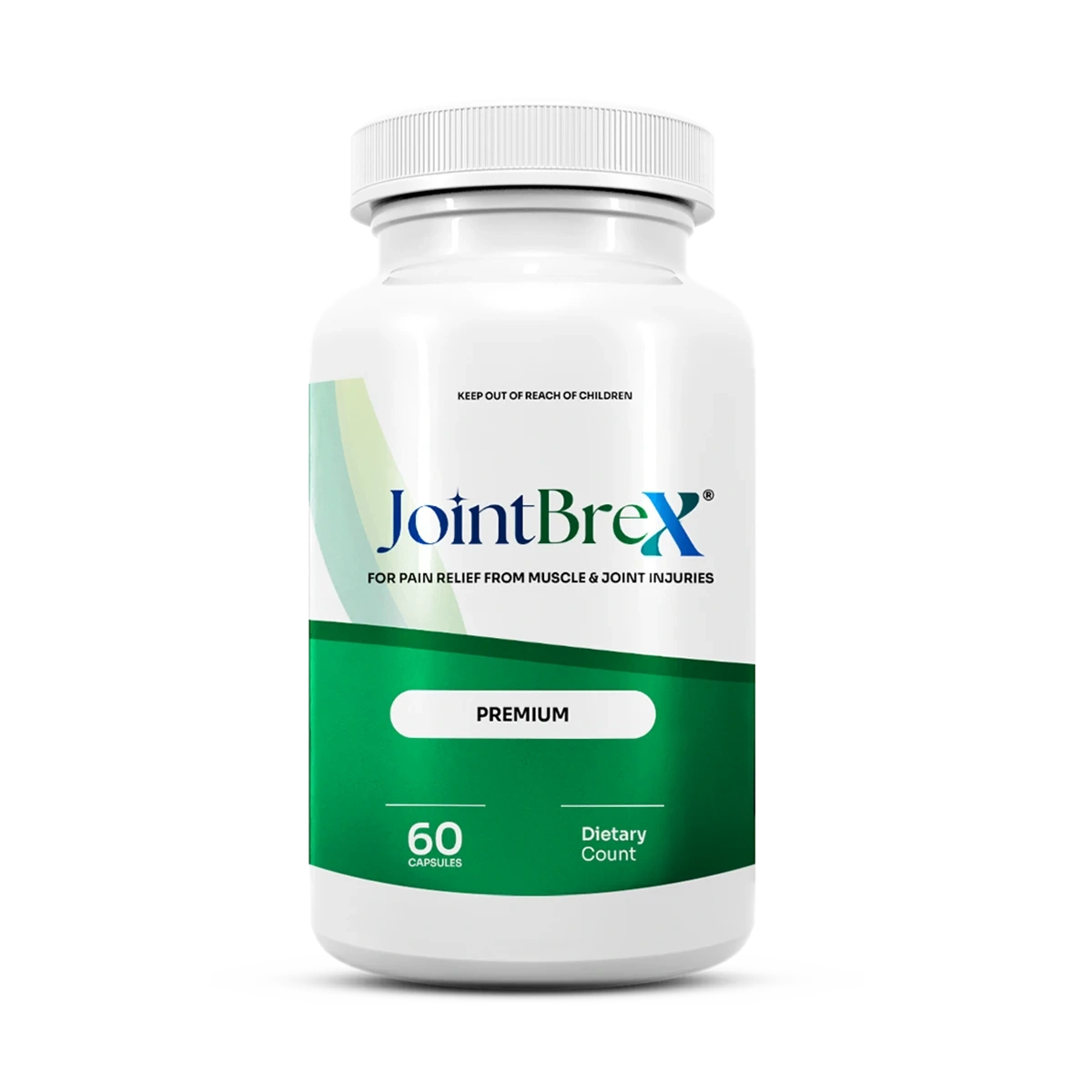
Order JointBrex with the gap in view
16.7 mg of MSM, printed on the panel alongside the other seven amounts, against a published literature that doses it in grams.
One bottle $89 · six bottles $294 · 60-day money-back guarantee
Order JointBrex1,400 mg a serving across eight printed lines · dispatched inside the United States
What's known, and what isn't, at 16.7 mg
What is known: MSM is a studied joint-pain ingredient with a positive-leaning, still-modest evidence base at gram-scale doses, and a documented safety margin well above those doses. What is also known: this panel's amount is far outside every published dose in that evidence base, by a factor of roughly thirty at the closest comparison and several hundred at the furthest.
What is not known, because nobody has published the trial, is whether 16.7 mg of MSM does anything measurable for a joint on its own. That is a materially different, more honest statement than either “MSM doesn't work” or “MSM is in this formula, so it's covered.” The panel prints a real ingredient at a real, checkable amount. The amount is simply not the one any cited trial has tested.
The wider constraint this line reflects — eight ingredients sharing 1,400 mg across two capsules — is set out in full on the Supplement Facts page.
- Kim LS, Axelrod LJ, Howard P, Buratovich N, Waters RF. Efficacy of methylsulfonylmethane (MSM) in osteoarthritis pain of the knee: a pilot clinical trial. Osteoarthritis Cartilage. 2006;14(3):286-94. PMID 16309928. https://pubmed.ncbi.nlm.nih.gov/16309928/
- Debbi EM, Agar G, Fichman G, et al. Efficacy of methylsulfonylmethane supplementation on osteoarthritis of the knee: a randomized controlled study. BMC Complement Altern Med. 2011;11:50. PMID 21708034. https://pubmed.ncbi.nlm.nih.gov/21708034/
- Lubis AMT, Siagian C, Wonggokusuma E, Marsetyo AF, Setyohadi B. Comparison of Glucosamine-Chondroitin Sulfate with and without Methylsulfonylmethane in Grade I-II Knee Osteoarthritis: A Double Blind Randomized Controlled Trial. Acta Med Indones. 2017;49(2):105-111. PMID 28790224. https://pubmed.ncbi.nlm.nih.gov/28790224/
- Butawan M, Benjamin RL, Bloomer RJ. Methylsulfonylmethane: Applications and Safety of a Novel Dietary Supplement. Nutrients. 2017;9(3):290. PMID 28300758. https://pubmed.ncbi.nlm.nih.gov/28300758/
- National Institute of Arthritis and Musculoskeletal and Skin Diseases. Osteoarthritis. U.S. National Institutes of Health. https://www.niams.nih.gov/health-topics/osteoarthritis